

Walk into almost any growing SME in Nairobi, Nakuru, or Mombasa and you'll find the same quiet drama playing out behind the scenes. The sales team has their own spreadsheet. Finance has a different one — usually with different totals. The warehouse guy still writes stock movements in a notebook that occasionally goes missing under a pile of delivery notes. And every month-end, someone stays back until 9 p.m. trying to make three disconnected systems agree with each other.
This isn't a failure of hard work. It's a failure of tools. And it's exactly the gap that Microsoft Dynamics 365 Business Central was built to close.
In this article, we'll unpack what "legacy systems" actually means in the Kenyan business context, how Business Central compares to them in practical, day-to-day terms, and what SME owners and finance managers should weigh before making the jump. No jargon for jargon's sake — just a straight conversation about what changes when you move off the old way of doing things.
What Do We Even Mean by "Legacy Systems"?
The word "legacy" sounds almost noble — like something handed down with pride. In IT, it means something less flattering: software that's outdated, difficult to maintain, and increasingly disconnected from how the modern business world actually runs.
In Kenya, "legacy systems" for an SME usually looks like one (or several) of the following:
- Standalone accounting software (think older desktop-based packages) that only finance can access, and only from one specific computer in the office.
- Excel-as-a-database — where inventory, payroll estimates, customer records, and sales pipelines live in files with names like
Stock_Final_FINAL_v3.xlsx. - Manual or semi-manual processes — paper-based approvals, physical filing cabinets for invoices, and reconciliations done by eyeballing numbers across systems that don't talk to each other.
- Old point-of-sale or inventory tools that were bought as a quick fix years ago and were never built to integrate with anything else, including KRA's eTIMS requirements.
None of these are "bad" in the sense that they got the business this far. But they were built for a different era — one before real-time compliance requirements, remote work, multi-branch operations, and data-driven decision-making became the norm rather than the exception.
What Business Central Actually Is
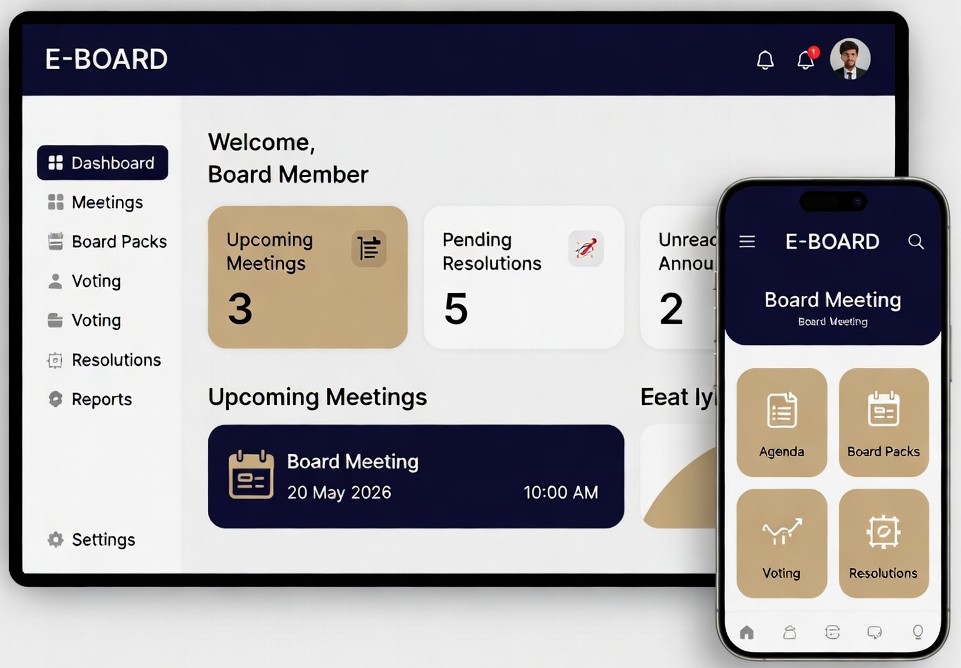
Microsoft Dynamics 365 Business Central is a cloud-based Enterprise Resource Planning (ERP) system. Strip away the acronym and here's what that really means: it's one connected system where finance, sales, inventory, procurement, and operations all live under the same roof — pulling from the same data, in real time.
Instead of finance waiting for the warehouse to "send the stock report" so they can close the books, both teams are already looking at the same live numbers. Instead of a sales rep quoting a price that doesn't match what's actually in stock, the system flags it instantly. It's less about adding new tasks to your business and more about removing the friction between the tasks you're already doing.
Because it's a Microsoft product, it also plays nicely with tools your team probably already uses — Excel, Outlook, Teams — which shortens the learning curve considerably.
The Core Differences: Legacy Systems vs. Business Central
Let's put the two side by side, because the differences are easiest to see in black and white.
| Area | Legacy Systems | Microsoft Dynamics Business Central |
|---|---|---|
| Data access | Siloed — finance, sales, and inventory often use separate, disconnected tools | Unified — one system, one source of truth across departments |
| Accessibility | Usually tied to one computer or physical office location | Cloud-based — accessible securely from anywhere, on any device |
| Real-time reporting | Manual compilation, often days or weeks behind | Live dashboards and reports, updated as transactions happen |
| Scalability | Struggles as branches, users, or transaction volume grow | Built to scale with your business, from 10 to 500+ users |
| Compliance (e.g., eTIMS, KRA requirements) | Manual workarounds, higher risk of errors or missed deadlines | Integrates directly with tools like eTIMS for smoother compliance |
| Security & backups | Often dependent on local hardware, prone to data loss | Enterprise-grade cloud security with automatic backups |
| Customization | Rigid, expensive, or simply impossible without custom coding | Flexible, with configurable workflows for your specific sector |
| Total cost of ownership | Lower upfront cost, but hidden costs pile up (IT support, downtime, manual labour) | Subscription-based, predictable costs, less reliance on in-house IT firefighting |
| Support & updates | Often unsupported or running end-of-life software | Continuously updated and supported by Microsoft and certified partners |
Looking at that table, the pattern is clear: legacy systems tend to win on familiarity and low upfront cost, while Business Central wins on almost everything that matters over the medium and long term — visibility, compliance, scalability, and the actual cost of keeping the lights on.
Why This Matters More in Kenya Right Now
This comparison isn't happening in a vacuum. A few very Kenyan-specific realities make the case for modern ERP even stronger this year.
1. eTIMS and Tax Compliance Are No Longer Optional
The Kenya Revenue Authority's electronic Tax Invoice Management System (eTIMS) has changed the compliance game for businesses of every size. Legacy systems that weren't designed with this in mind force businesses into manual double-entry — invoicing in one system, then re-entering the same data into eTIMS separately. That's not just tedious; it's a real risk of penalties from simple human error. A modern ERP with built-in eTIMS integration removes that entire manual step.
2. Multi-Branch and Remote Operations Are the Norm
Whether you're running a SACCO with branches across counties, a dairy cooperative coordinating with multiple collection centres, or a retail business with outlets in different towns, the "one computer, one office" model of legacy software simply doesn't hold up anymore. Business Central's cloud foundation means a finance manager in Nairobi and a branch manager in Eldoret are looking at the exact same numbers, at the exact same time.
3. Access to Credit and Investment Increasingly Depends on Clean Financial Data
Banks, SACCOs, and investors are asking sharper questions than they used to. "Can you show me real-time financial statements?" is a very different (and much harder) question to answer when your numbers live across five spreadsheets versus one integrated system that can generate a report in seconds.
4. The Talent Pool Expects Modern Tools
Younger finance and operations professionals entering the Kenyan job market have grown up with cloud tools. Asking a fresh graduate to "wait for the file to be emailed" or "check with the other office" because your systems don't talk to each other isn't just inefficient — it affects how competitive you are as an employer.
A Realistic Scenario: The SACCO Struggling with "Version Control"
Picture a mid-sized SACCO with four branches. Each branch records member contributions and loan repayments on a local system. Every Friday, someone manually consolidates the figures into a master spreadsheet for head office. Sound familiar?
The problems compound quickly:
- Numbers from different branches don't always match by the time they reach head office.
- Loan officers can't see a member's full repayment history if that member has transacted at a different branch.
- Month-end reporting to regulators takes days instead of hours, because everything has to be manually reconciled first.
- Any errors introduced during the manual consolidation stay hidden until an audit surfaces them — often months later.
With Business Central, the same SACCO would have every branch transacting into one live system. A member's full history — regardless of which branch they walked into — is visible instantly. Reports that used to take days are generated in minutes, and the SACCO's leadership can make decisions based on current data, not last week's data.
This isn't a hypothetical dressed up as reality — it's the exact pattern we see across SACCOs, NGOs, and cooperatives that are still relying on disconnected, branch-level tools.
"But Isn't ERP Just for Big Corporates?"
This is probably the most common objection we hear from SME owners, and it's worth addressing head-on.
ERP systems used to have a reputation — and honestly, it was earned — for being expensive, complicated, and built for large enterprises with dedicated IT departments. That reputation is outdated.
Modern cloud ERP platforms like Business Central were specifically designed to be modular and scalable. You don't need to implement every module on day one. A growing SME might start with finance and inventory, then layer in CRM or Power BI reporting as the business matures. You pay for what you use, and the system grows with you rather than forcing you to "grow into it" from day one.
The bigger risk, frankly, isn't adopting ERP too early — it's adopting it too late, after inefficiencies have already cost the business money, time, and missed opportunities that are much harder to quantify but very real.
What Kenyan SMEs Should Actually Ask Before Migrating
If you're seriously weighing a move away from legacy systems, here are the questions worth sitting with before you commit to anything:
Do we actually understand our current pain points?
It's tempting to jump straight to "we need new software." But the more useful starting point is mapping out exactly where your current systems are costing you time, money, or accuracy — late reports, compliance headaches, disconnected inventory, whatever it is. This becomes your success criteria for the new system.
What does our data migration actually involve?
Years of historical data don't move themselves. A proper implementation partner will map out what data needs to migrate, clean it up in the process (this is actually a great opportunity to fix old errors), and test it thoroughly before go-live.
Who on our team needs to be trained, and how?
The best ERP system in the world underperforms if the people using it daily haven't been properly onboarded. Look for an implementation partner who builds in structured training — not just a one-day crash course and a manual nobody reads.
What's our realistic implementation timeline?
Be wary of anyone promising a full ERP rollout in two weeks. A properly scoped Business Central implementation — one that accounts for your specific sector, data cleanup, integrations (like eTIMS or payments), and staff training — typically takes several weeks to a few months, depending on complexity. Rushed implementations are where most of the horror stories come from.
Is our implementation partner actually certified?
This matters more than people realize. A certified Microsoft partner brings structured methodology (Fanisi Tech, for instance, uses Microsoft's Sure Step Methodology), accountability, and ongoing support — versus a freelancer or reseller who disappears after go-live.
The Hidden Cost Nobody Talks About: Staying Put
There's a version of this conversation that focuses entirely on "the cost of switching." But the more honest conversation is about the cost of not switching.
Every month spent on a legacy system is a month of:
- Staff hours lost to manual reconciliation that software could do instantly
- Decisions made on outdated or incomplete data
- Compliance risk from manual tax and invoicing workarounds
- Growth constrained by systems that can't handle a second branch, a bigger team, or a new revenue stream
- Vulnerability to data loss from hardware failure, with no proper cloud backup
None of these show up as a single dramatic bill. They show up quietly, in slower growth, tighter margins, and stress that's hard to trace back to its actual source — the software holding everything together with duct tape.
Final Thoughts
Switching from a legacy system to a modern ERP platform like Microsoft Dynamics Business Central isn't about chasing the latest trend. It's about giving your business the kind of visibility and control that lets you actually run it, instead of constantly reacting to it.
For Kenyan SMEs navigating tighter compliance requirements, multi-branch operations, and a business environment that moves faster every year, the question isn't really "can we afford to make this move?" It's "can we afford to keep operating the way we are?"
If you're staring at your third spreadsheet of the day and wondering if there's a better way — there is, and it's not as complicated or as expensive as you might think.
Ready to See What This Looks Like for Your Business?
Every business's situation is different, and the right next step is usually a conversation, not a sales pitch. Fanisi Tech Ltd is a Certified Microsoft Partner with hands-on experience implementing Business Central for SACCOs, NGOs, dairy cooperatives, pension schemes, and private-sector businesses across Kenya. If you'd like an honest assessment of where your current systems are costing you — no obligation attached — reach out to us.
Get in Touch with Fanisi Tech Ltd
Office Number 718, 7th Floor, KU PLAZA, Haile Sallassie Avenue, Nairobi CBD
Postal Address: P.O Box 25063-00100, Nairobi, Kenya
Phone: +254743313103
E-mail: Info@fanisitech.com
Website: www.fanisitech.com
Latest Comments
No comments yet for this post. Be the first to comment
Comment on the blog "Microsoft Dynamics Business Central vs. Legacy Systems: What …"