

Corporate governance has always been the backbone of any well-run organisation. It defines how decisions are made, how accountability is upheld, and how leadership fulfils its responsibilities to stakeholders. Yet for decades, the tools used to manage this critical function have remained largely unchanged — paper-heavy board packs, physical meetings, manual minute-taking, and filing cabinets filled with sensitive documents. In an era where digital transformation is reshaping every corner of the business world, the boardroom has, until recently, been left behind.
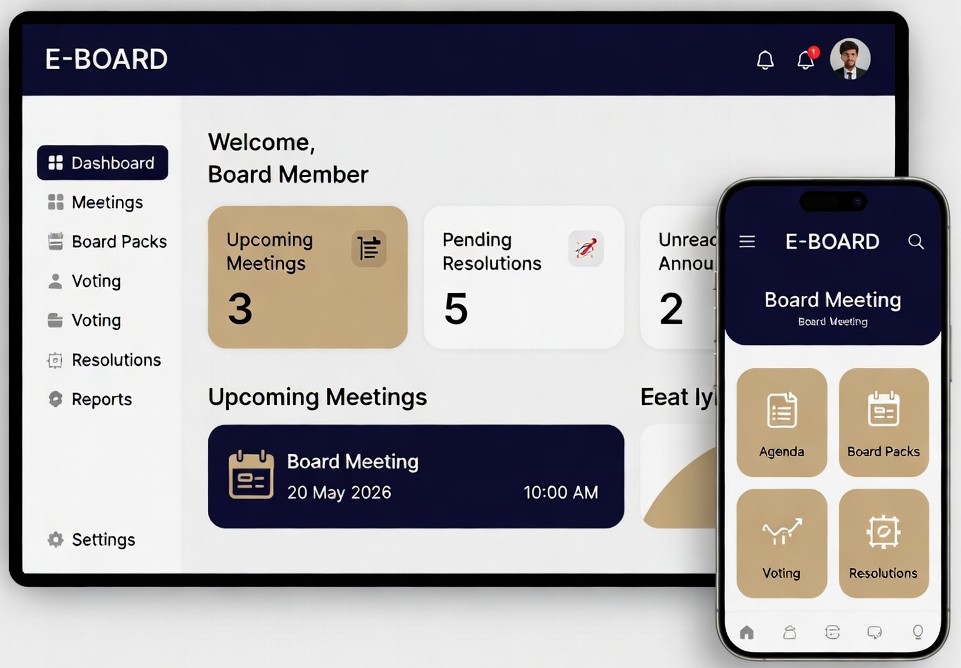
FanisiTech Limited, a Nairobi-based ICT consultancy specialising in enterprise technology solutions, is changing that. Through its eBoard Management System, FanisiTech is giving organisations across Kenya and the wider East African region a modern, secure, and efficient platform to manage their board operations — from meeting scheduling and document distribution to voting, approvals, and minute management — all in one place.
The Governance Challenge Facing Kenyan Organisations
Many organisations in Kenya — whether public institutions, parastatals, financial entities, universities, or private companies — continue to rely on manual, paper-based processes to run their boards. The inefficiencies are well documented. Board packs are printed days in advance and couriered to directors at significant cost. Sensitive documents pass through multiple hands before reaching the boardroom. Last-minute amendments mean reprinting and redistribution. Minutes are typed up long after meetings conclude, sometimes with errors or omissions.
Beyond the operational burden, these approaches pose serious governance risks. Physical documents can be lost, misplaced, or accessed by unauthorised parties. There is no reliable audit trail for when a document was viewed or by whom. Remote or travel-bound directors struggle to participate meaningfully. And when organisations face scrutiny from regulators or auditors, assembling a coherent record of board decisions can be a slow and painful exercise.
The COVID-19 pandemic accelerated the conversation about digital board management. As in-person meetings became impossible, many organisations scrambled to adopt video conferencing tools that were not purpose-built for governance. While video calls helped keep meetings going, they fell short of providing the structured, secure, and documented environment that board operations genuinely require.
Introducing FanisiTech's eBoard Management System
FanisiTech's eBoard solution was designed specifically to address these challenges. Built with the needs of Kenyan and East African institutions in mind, the system provides a centralised digital platform where everything related to board management happens in one secure, accessible environment.
At its core, the eBoard system enables organisations to manage the full lifecycle of a board meeting — from the moment an agenda is drafted to the point where minutes are approved and resolutions are recorded. Directors, board secretaries, and administrators each have defined roles and access levels, ensuring that the right people see the right information at the right time.
Key Features of the eBoard Platform
1. Digital Board Pack Distribution
One of the most immediate benefits of the eBoard system is the elimination of physical board packs. All meeting documents — agendas, reports, financial statements, strategy papers, and supporting materials — are uploaded to the platform and made available to directors through a secure portal. Directors can access their board packs from any device, at any time, ahead of the meeting. Annotations, highlights, and notes can be made directly on documents, making preparation more thorough and meetings more productive.
2. Secure Document Management
Governance documents are among the most sensitive records an organisation holds. FanisiTech's eBoard system applies robust access controls, role-based permissions, and encryption to ensure that confidential information is protected at all times. Only authorised users can access specific documents, and the system maintains a complete audit log of all interactions — who accessed what, when, and what actions were taken. This level of transparency and traceability is invaluable during audits, regulatory reviews, or legal proceedings.
3. Meeting Scheduling and Notifications
The platform simplifies the logistics of organising board meetings. Administrators can schedule meetings, send automated notifications and reminders to directors, and manage RSVPs — all within the system. Integration with calendar applications ensures that meetings are captured in directors' schedules without manual data entry. Last-minute changes to agendas or meeting details are communicated instantly to all participants.
4. Real-Time Collaboration and Voting
Whether directors are in the boardroom or connecting remotely, the eBoard platform supports real-time collaboration. Directors can participate in discussions, raise agenda items, and cast votes directly through the system. Electronic voting eliminates ambiguity, ensures accurate recording of decisions, and speeds up the resolution process. For resolutions that require approval outside of a formal meeting, the system supports circular resolutions — a feature that is increasingly important for organisations that need to act quickly.
5. Minute Management and Approvals
After every meeting, the board secretary can draft, circulate, and obtain approval for minutes entirely within the platform. Directors can review the draft minutes, suggest amendments, and formally approve them — all digitally and with a clear record of who approved what and when. This removes the delays that typically accompany traditional minute management and ensures that the official record of board decisions is captured accurately and promptly.
6. Action Tracker and Follow-Up
One of the most overlooked aspects of effective governance is follow-through on decisions. FanisiTech's eBoard system includes a built-in action tracker that records resolutions and assigns responsibilities, deadlines, and status updates. Board secretaries and directors can monitor the progress of action items between meetings, ensuring accountability and continuity across the board's work.
Why This Matters: The Governance Impact
The benefits of adopting an eBoard system go far beyond operational convenience. At a strategic level, digital board management strengthens governance frameworks in ways that have measurable impact on organisational performance and credibility.
Enhanced Accountability and Transparency
With every action recorded and traceable, the eBoard system creates an environment of accountability that is difficult to achieve with paper-based processes. Board members know that their participation, votes, and decisions are documented in real time. This encourages more deliberate and responsible decision-making and reduces the risk of disputes over what was agreed or who was present.
Improved Director Engagement
When directors can access board materials easily, prepare thoroughly, and participate from anywhere, their engagement with board work improves significantly. The eBoard platform removes the friction that often discourages active participation — particularly from directors who travel frequently or sit on multiple boards. Better-prepared and more engaged directors lead to higher-quality discussions and stronger governance outcomes.
Cost and Time Savings
The financial case for eBoard adoption is straightforward. Printing, binding, and distributing physical board packs for every meeting is a substantial recurring cost, particularly for organisations with large boards or frequent meetings. Add to this the costs of physical storage, courier services, and administrative time spent managing paper documents, and the savings from going digital become significant. FanisiTech's clients have reported reductions in board-related administrative costs from the very first year of adoption.
Regulatory Compliance and Audit Readiness
In an environment of increasing regulatory scrutiny — whether from the Capital Markets Authority, the Central Bank of Kenya, State corporations oversight bodies, or sector-specific regulators — organisations must be able to demonstrate robust governance practices. The eBoard system's comprehensive audit trail, secure document storage, and structured decision records make it far easier to respond to regulatory enquiries and audits with confidence and speed.
FanisiTech's Approach: More Than a Software Vendor
What sets FanisiTech apart in the eBoard space is not just the technology — it is the approach. FanisiTech does not simply sell software and walk away. The company works closely with each client to understand their governance structure, customise the platform to their specific needs, and provide comprehensive training and ongoing support to ensure successful adoption.
This is particularly important in the Kenyan and East African context, where digital literacy among board members can vary significantly, and where organisations may be navigating the transition from fully manual processes for the first time. FanisiTech's implementation team takes the time to onboard all users — from the most tech-savvy director to the most cautious — ensuring that the system delivers value from day one.
FanisiTech also provides dedicated post-implementation support, system updates, and Service Level Agreement (SLA) backed maintenance to ensure that the platform continues to perform reliably as the organisation's needs evolve. Clients are not left to manage the technology on their own.
Who Is the eBoard System For?
FanisiTech's eBoard solution is suitable for any organisation that has a board of directors or a governing council and wishes to modernise its governance processes. Current and prospective users include:
State corporations and government agencies that are under mandate to improve public sector governance and accountability. Universities and higher education institutions whose councils oversee significant institutional decisions. Financial institutions — including banks, insurance companies, and SACCOs — that are subject to strict corporate governance requirements. Private companies that wish to adopt best-practice governance frameworks as they grow. Non-governmental organisations and associations whose boards are responsible for fiduciary and strategic oversight.
In each of these settings, the eBoard system adapts to the specific governance model of the organisation, supporting everything from small executive committees to large, multi-tier boards with sub-committees.
The Road Ahead: Digital Governance as a Competitive Advantage
As Kenya continues its journey towards a knowledge-based, digitally enabled economy, the organisations that will thrive are those that embed good governance into their DNA. Digital board management is no longer a luxury or a future ambition — it is a present-day necessity for organisations that take their governance obligations seriously.
FanisiTech is committed to being the partner of choice for organisations making this transition. The eBoard Management System represents the company's belief that technology, when properly implemented and supported, can fundamentally improve the quality of governance — not just the efficiency of administration.
The boardroom of tomorrow is digital, secure, and accountable. FanisiTech is building it today.
Ready to Transform Your Business with FanisiTech's eBoarding Solution?
Contact Fanisitech Limited today for a free consultation and discover how we can design an eBoard solution tailored to your business needs, industry, and budget.
www.fanisitech.co.ke | info@fanisitech.co.ke | +254743313103 | Office Number 718, 7th Floor,
KU PLAZA, Haile Sallassie Avenue,
Nairobi CBD
Latest Comments
No comments yet for this post. Be the first to comment
Comment on the blog "How FanisiTech's eBoard Solution is Revolutionizing Corporate Governance"